



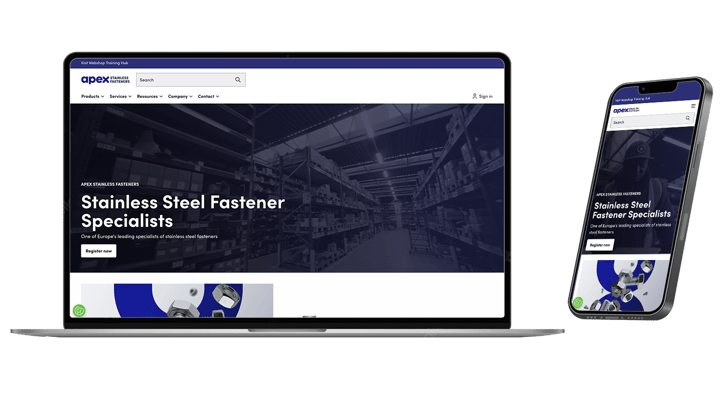


Manufacturing companies do not sell impulse purchases. Your customers know exactly what they need, but your web store has to handle the complexity behind every order.
A customer buying 500 stainless steel bolts in M8 x 40mm needs to see the right price based on their agreement, confirm stock availability from your ERP system, and download technical specifications before they even place the order. If your platform cannot handle that smoothly, you lose the sale to someone who can.
Having spoken with dozens of manufacturers who have switched e-commerce platforms over the past few years, we see the same pattern: most standard solutions are built for B2C. They assume all customers pay the same price, that products come in simple variants (size S, M, L), and that nobody needs to download a CAD file before buying.
That does not work for manufacturing.
Here are the seven features that actually matter when choosing an e-commerce platform.
1. Customer-specific pricing (not just discount codes)
Manufacturers rarely have a single price list. The same product might cost one price for one customer, less for another, and even less for someone buying in higher volumes. These are not discounts applied at checkout. They are structured contract prices tied to customer numbers in your ERP system.
What this means in practice:
The customer logs in. The system retrieves their customer number from your ERP system (Jeeves, Business Central, Monitor, SAP). Every product automatically shows the correct price based on their agreement. No coupons. No manual adjustments. Just the right price from the first page view.
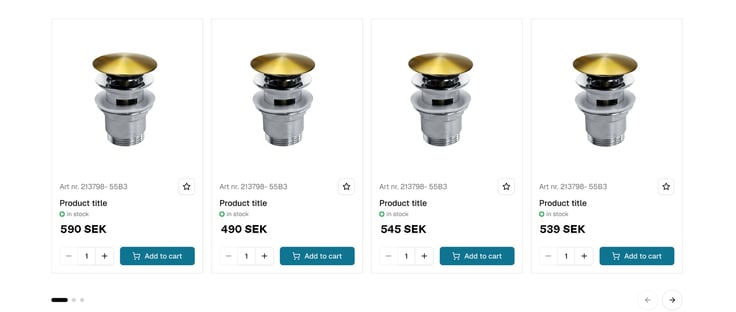
Volume discounts should also be visible immediately. "Buy 100+ and pay X per unit" should not be a surprise at checkout. It should be shown on the product page so the customer can plan their purchase.
Bevent Rasch, a manufacturer of ventilation and climate products, doubled their order intake after launching a B2B e-commerce platform with customer-specific pricing. Their sales team was freed from manual order processing and could instead focus on customer relationships and business development.
Why standard solutions fall short:
Most e-commerce platforms handle this with customer groups or wholesale mode. That works for simple scenarios (retail vs wholesale), but breaks down when you have 200 customers with 200 different price lists. You need a platform that syncs prices directly from ERP, in real time.
2. Technical product information (more than just images)
A bolt is not just a bolt. It has tensile strength, surface treatment, material, length, diameter, tolerances, and certifications. Your customers need that information before they buy, not after.
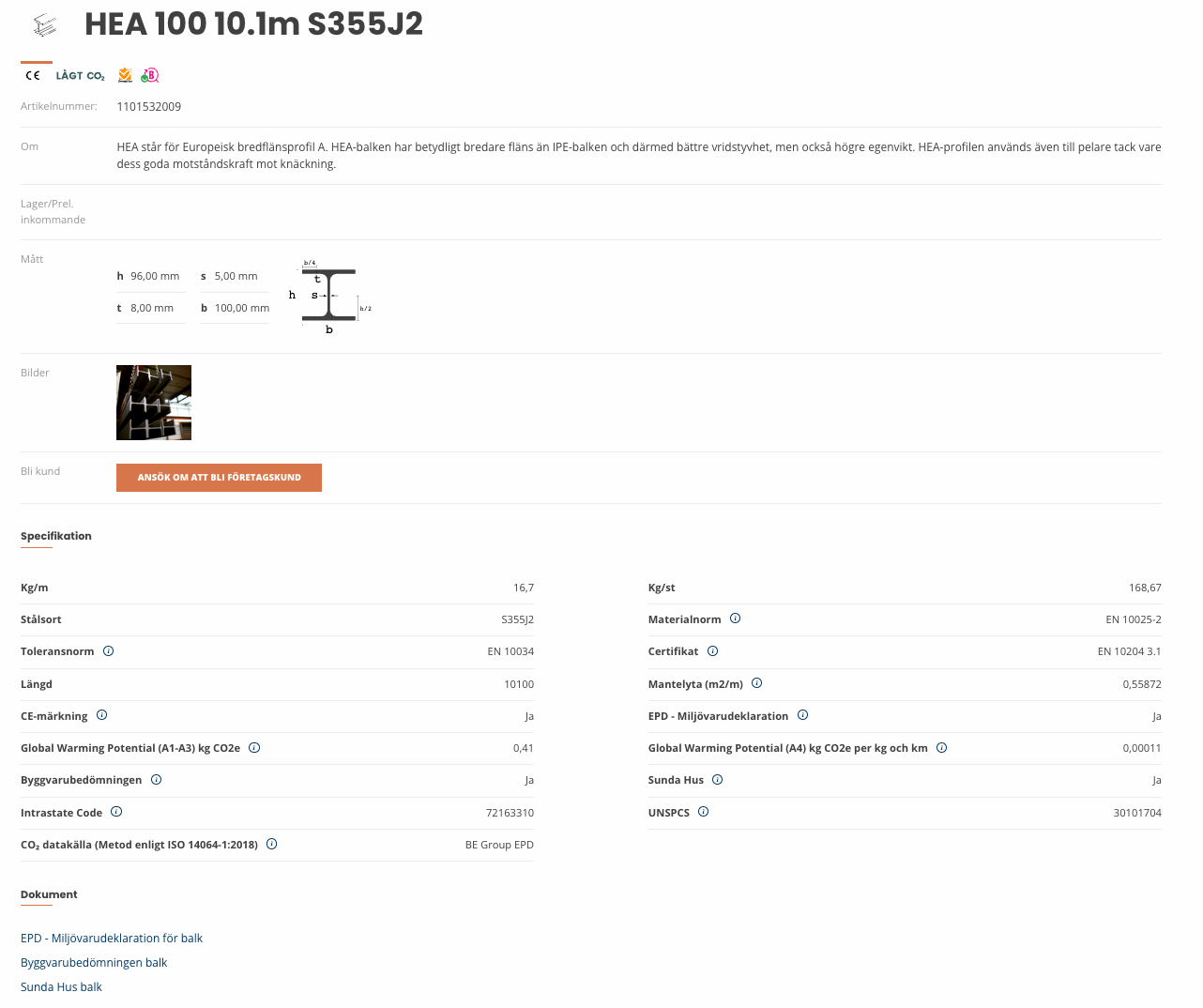
What customers actually need:
- CAD files (STEP, IGES) for products they are designing into their own constructions
- Technical drawings (PDF) with exact dimensions
- Safety data sheets (mandatory for chemicals, but relevant for much else)
- Certificates (material certificates, REACH compliance, RoHS)
- Assembly instructions (PDF or video)
This should not be "contact us and we will send it over." It should be downloadable directly on the product page.
Swede-Wheel, a supplier of wheels and transport solutions for industry, saw a doubling of 3D file downloads after uploading technical files directly to their product pages. Customers found the files themselves instead of calling support. Nordic Waterproofing now sees around 3,000 document and instructional video downloads every month through their platform.
Technical solution:
Your e-commerce platform needs a PIM system (Product Information Management) that can handle thousands of files linked to each product. Not just an image and a description. Files, specifications, variants: all in one place.
3. Fast reordering (order history that actually works)
B2B customers buy the same things over and over again. A manufacturer buying screws for their products orders the same items every month. If they have to search for each product manually every time, they will switch to a supplier where it is faster.
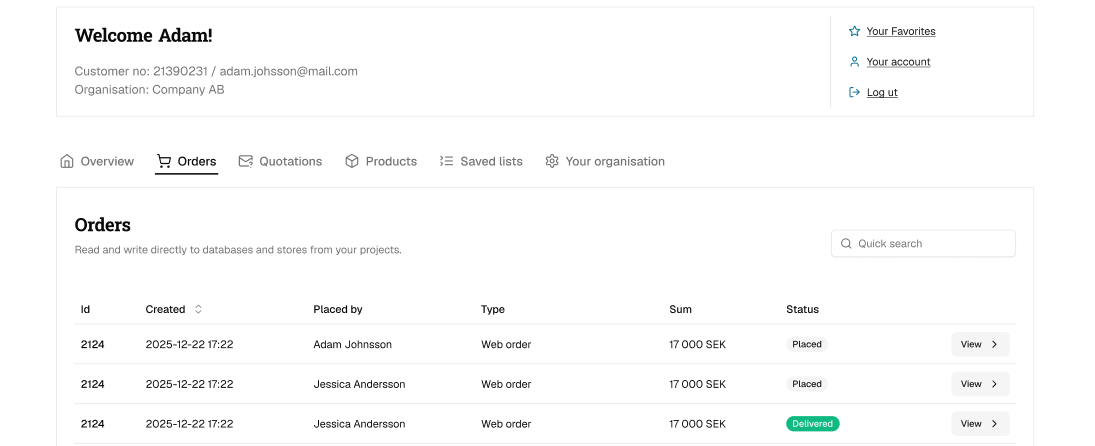
What it needs to do:
- Show full order history, not just the last ten orders
- A reorder button that adds the entire order to the cart in one click
- Favourite lists for saving common combinations
- Scheduled reordering for automatic monthly orders
Swede-Wheel finds that nearly 40% of their B2B customers regularly use the platform's features for stock availability, contract pricing, and technical documentation. Returning customers who find everything in one place order faster and more often, and they do not leave for a competitor who offers a smoother experience.
Why this matters:
If your competitor offers easier reordering, they win the sale even if their products cost more. Time is money for procurement teams.
4. Real-time ERP integration (not nightly sync)
"Product is in stock" on the web but "sorry, we're out" when the order arrives. This damages trust faster than almost anything else.
What real-time integration means:
When a customer looks at a product, the system retrieves the stock balance directly from your ERP. Not from a database that synced at 3am. Now.
When they place an order, it is created directly in ERP. No manual transfer. No risk of the order getting lost between systems.
Why nightly sync is not enough:
If you sell fast-moving items, the stock situation at 2pm is different from what it was at 3am. Customers placing orders online cannot know that the same item sold out by phone or in-store an hour earlier. The result is orders you cannot deliver as promised, and trust that is hard to rebuild.
Apex Stainless Fasteners solved this with real-time ERP integration. Today, 63% of their B2B customers log in daily to check stock availability and pricing themselves, and they can trust that the numbers are accurate.
Technical requirements:
Your platform needs an API connection to your ERP. Not a flat file export every night. API calls on every page load and every order. It sounds demanding, but modern systems handle it without issue.
5. Product variant management (more than colour and size)
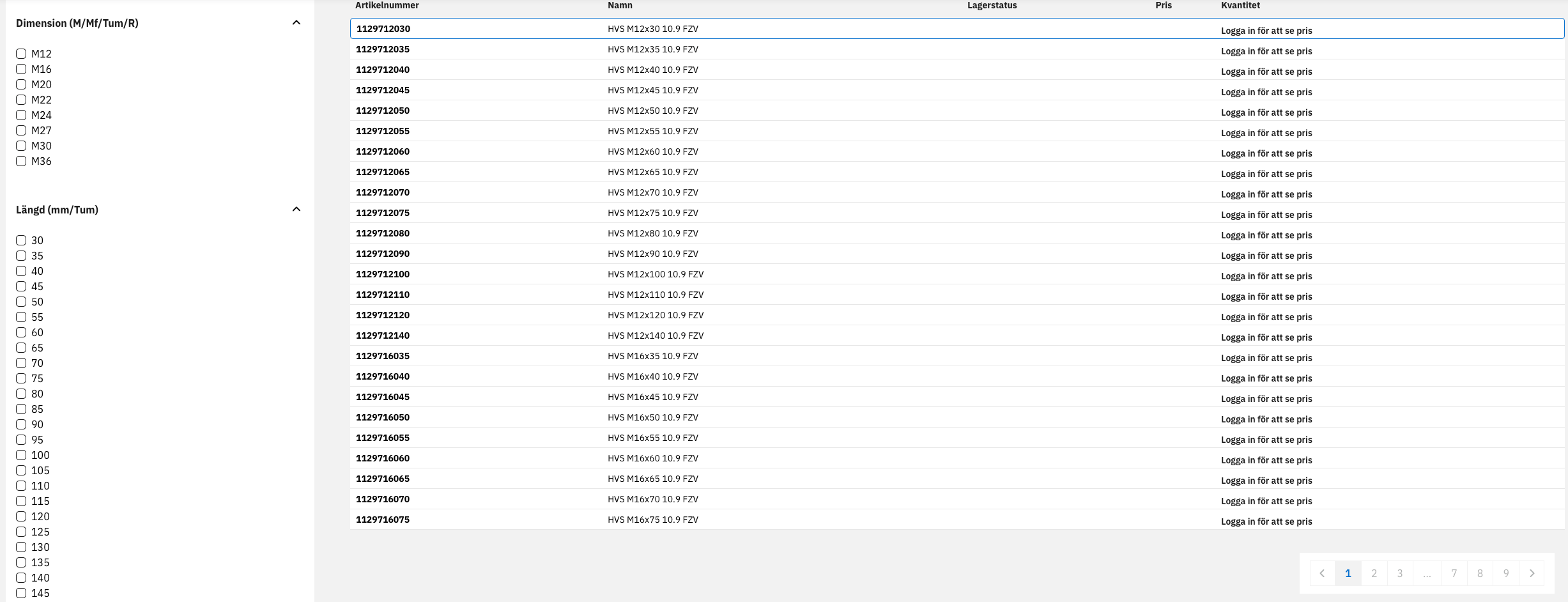
A screw can have 50 variants: 10 lengths times 5 diameters equals 50 SKUs. A hydraulic cylinder can have hundreds of combinations of stroke length, piston diameter, and fittings.
How it should work:
The customer selects variants from dropdowns. Price and stock update instantly. The item number is displayed so they know exactly what they are ordering.
Not 50 separate product pages. One product page with intelligent variant management.
Why this is difficult:
Many platforms build variants as "same product, different attributes" (like a t-shirt in different colours). But for manufacturers, each variant is often a completely separate item in ERP with its own item number, its own stock, its own price.
Your platform needs to correctly map web variants to ERP item numbers.
6. Multilingual and multi-market support (for exporters)
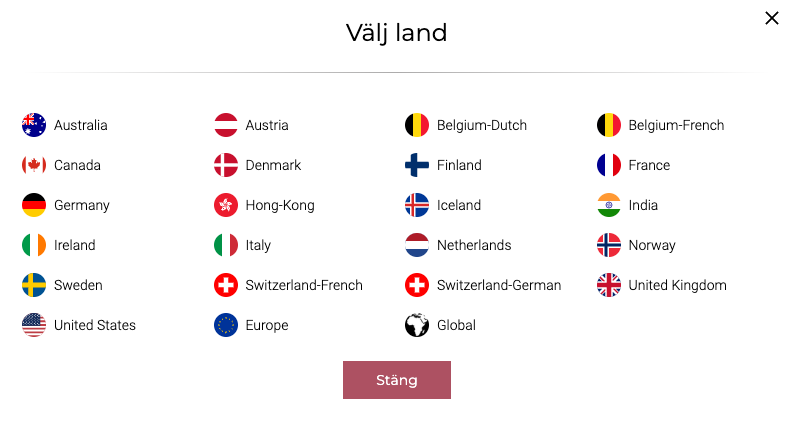
If you sell to Germany, Norway, and Poland, your e-commerce needs to show the right language, the right currency, and the right prices per market.
What it requires:
- Translations (product descriptions, categories, UI)
- Currency management (with current exchange rates)
- Different prices per market (the same product can cost differently in different countries)
- Shipping options per country
One industrial equipment supplier expanded to Norway and Germany. Their platform could not handle multiple languages properly, so they ran three separate web stores. The result was three times the administration, no shared customer data, and an impossible workload.
After switching to a platform with built-in multi-market support, they managed all markets from a single system.
Technical detail:
Each product needs to support separate translations and prices per market, while sharing the same backend logic for stock, orders, and integration.
7. Customer portals (not just a checkout)
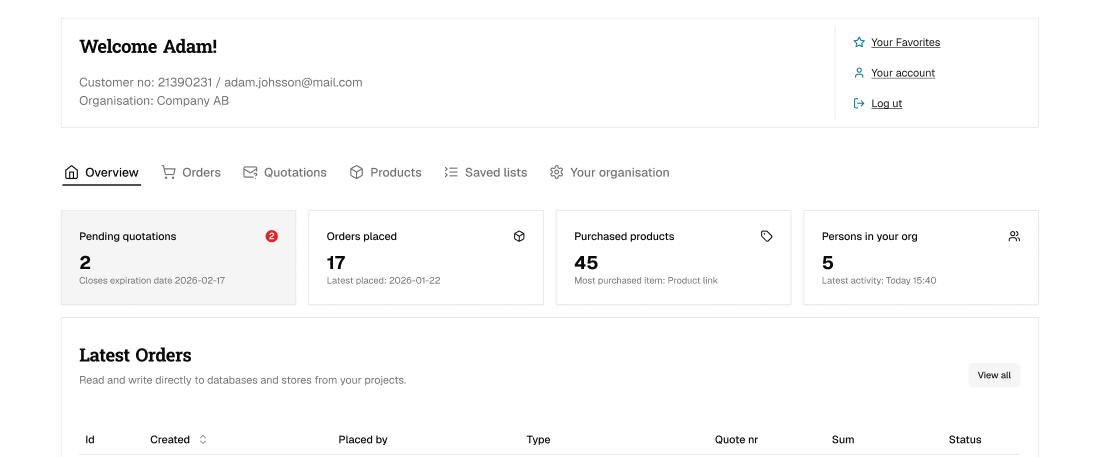
B2B is a relationship, not a transaction. Your customers need more than the ability to buy. They need to see their invoices, track deliveries, download previous orders, and manage their users. A customer portal gives them full control.
What a customer portal should include:
- Order status (where is my delivery?)
- Invoices (view and download PDF)
- User management (let the customer company add their own users with different permissions)
- Credit limit (show remaining credit if they have credit terms)
- Contracts and prices (transparency about what applies)
This reduces support requests significantly. Instead of calling to ask "where is my order?", the customer can see it themselves.
Apex Stainless Fasteners finds that 63% of their B2B customers log in daily to check order status, stock, and prices on their own, without needing to call. BE Group attracted new customer segments who prefer to order digitally around the clock, and increased their online sales without losing a single offline customer.
ERP integration:
All of this data already exists in your ERP. The portal just needs to present it in a clear way. That requires an API connection that can retrieve order status, invoices, and user information in real time.
What actually matters
If your current e-commerce platform requires manual work for customer-specific pricing, cannot show stock availability in real time, or forces customers to call for CAD files, it is slowing your growth.
The seven features above are not nice to have. They are fundamental to how manufacturing companies actually operate.
The right platform should:
- Sync with your ERP without manual steps
- Show the correct price and stock for each customer
- Make reordering simple
- Handle technical documentation smoothly
- Work across your markets (languages, currencies)
- Give customers control without needing to call you
If you are considering switching platforms or implementing e-commerce for the first time, start by checking whether the platform can handle these seven points. Not in theory. In practice, with your ERP, your products, your customers.
Book 15 minutes with Caroline to find out how Litium can help you with your B2B e-commerce. 👇