





The most common mistake B2B companies make when investing in e-commerce is treating it as a system selection rather than an architecture decision. They ask: "Can this ERP handle e-commerce?" The right question is: "Do we understand what role each system should play?"
That is an important distinction. A well-functioning B2B e-commerce operation is built on three systems with three distinct roles: the ERP as master for finance, customer data, and product information; PIM to enrich and present product data for the web; and the e-commerce platform to manage the order flow. When those three systems share the right data with each other in real time, it works. When the boundaries are unclear, the problems begin.
We see the same pattern over and over: prices that do not synchronise, stock levels that show incorrectly, orders stuck in a manual handover between systems. The result is a project for three IT consultants and a half-working webshop. The problem is almost never which platform was chosen — it is how the systems are connected and who owns what.
Here are the five things that actually determine whether the combination works.
1. The right data in the right system: how ERP, PIM and OMS work together
There is widespread confusion about how the ERP, PIM, and order management relate to each other. That confusion costs money.
The ERP is the backbone. It holds master data for the entire operation: item numbers, base prices, stock positions, customer records, and contract prices. It is the source every other system trusts.
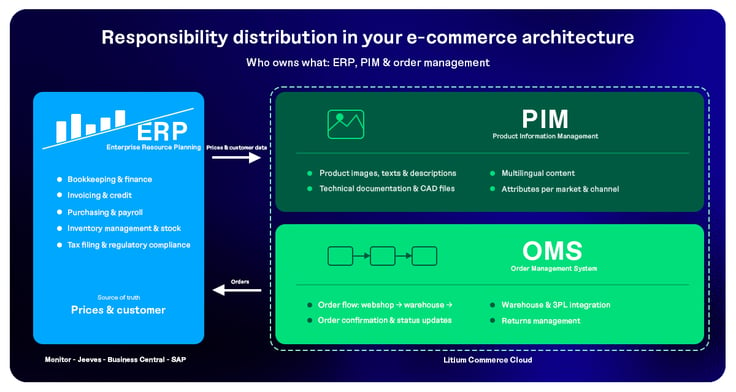
A modern B2B e-commerce platform has a built-in PIM (Product Information Management) that pulls base data from the ERP and enriches it for external presentation: product images, texts, technical documentation, CAD files, and videos, structured per market and language. The division of responsibility is clear — the ERP owns the base, PIM owns the presentation.
In the same way, the e-commerce platform handles the order flow, what is sometimes called an OMS (Order Management System): from the customer placing an order in the webshop, through logistics and fulfilment to delivery confirmation and connection to warehouse and 3PL. The ERP has other critical responsibilities — the right tool in the right place is what matters most.
That means you can evaluate business systems based on what they are actually supposed to deliver:
- Bookkeeping and financial management
- Invoicing and credit management
- Payroll
- Inventory management and stock movements
- Tax compliance and regulatory requirements
- Purchasing based on stock levels and forecasts
- Master record for product information
- Time and project management
The ERP is the source of truth for prices, customer data, and product master data. It connects to your e-commerce platform via API and shares that data in real time.
Once the responsibilities are clear, the next question is: how good is that connection? There is a significant difference between an integration being possible and an integration being ready. A possible integration means the system has an API and that a connection can technically be built. That can take six months and cost several hundred thousand. A ready integration is documented, maintained, and works from day one.
Litium's ERP integrations with Jeeves, Business Central, Monitor, Infor M3 are built and maintained by Litium or certified partners, not custom-built solutions that each customer has to maintain themselves.
2. Can the business system handle customer-specific pricing and contract logic?
B2B pricing is not about adding a discount code at checkout. It is complex contract structures per customer, sometimes per product category, sometimes with volume tiers, sometimes with time-limited promotional prices.
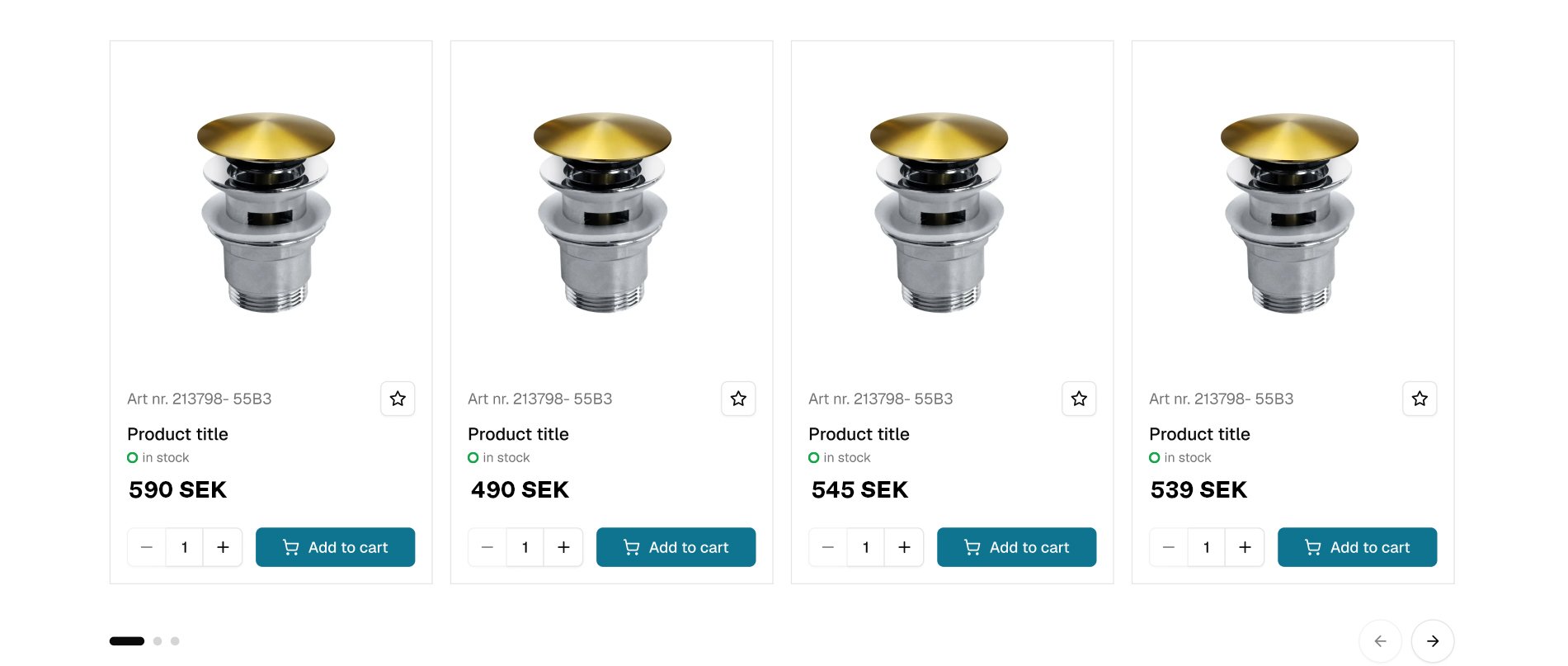
The ERP is the source of truth for prices. Not the e-commerce platform. Not a spreadsheet. The ERP.
That means your business system must be able to:
- Store contract prices per customer and customer group
- Handle volume discounts (price tiers based on quantity)
- Support time-limited promotional prices per customer
- Expose these prices in real time via API to the e-commerce platform
"In real time" is critical. If the e-commerce platform fetches prices once per night and a contract price changes at 10 AM, the customer sees the wrong price until the next synchronisation. That is professionally unacceptable in B2B.
Bevent Rasch doubled their order intake after connecting their e-commerce directly to the ERP's pricing logic. No manual handling. The correct price is shown automatically to the right customer from the first page view.
Ask the vendor exactly how price synchronisation works. Is it real time via API calls, or is it a batch export on a schedule? If the answer is "we export prices every evening", that is a warning sign for B2B e-commerce with complex pricing structures.
3. Stock and orders in real time: run this test before you sign
There is a simple test to determine whether a business system is ready for e-commerce: remove a unit manually from stock in the system, then look at the webshop. Did the stock level update immediately?
If the answer is no, you know what you are dealing with.
Batch synchronisation, meaning stock levels and order data are exported and imported on a scheduled interval, was an acceptable solution ten years ago. Today it creates concrete business problems:
- A customer sees a product in stock. It sold out four hours ago, but the batch does not run for another three hours.
- A customer places an order in the webshop. The order goes into a queue and is transferred to the ERP at the next sync. In the meantime, no one in the organisation can see that the order exists.
- A manual order by phone and a web order collide on the last available unit. One of the customers does not receive their goods.
Real-time integration means every page load in the webshop fetches a current stock level via a direct API call to the ERP, and every order is sent into the ERP immediately when the customer clicks "Confirm order".
That places demands on the ERP's API performance. Ask the vendor how many API calls per second their system can handle and whether they have reference installations with similar traffic volumes to your webshop.
Apex Stainless Fasteners has 63% of their B2B customers logging in daily to check stock levels and prices on their own. That figure requires customers to actually trust that the data is correct. If they did not trust the stock numbers, they would call instead of log in to check.
4. Will you sell in more markets within three years?
Many business systems are built for a single company in a single country with a single currency. They can be extended with workarounds for additional markets, but workarounds cost money to maintain and require manual work.
If you currently only sell in your home market but have a realistic chance of expanding to a neighbouring country in three years, it is worth asking the questions now. Migrating to a new ERP because the old one could not support expansion is a project that costs more in time, money, and disruption than choosing correctly from the start.
Ask specifically about:
- Multi-company support: can you run legally separate companies within the same ERP instance?
- Currency handling: are exchange rates handled automatically, or do you update them manually?
- VAT rules per country: does the system handle VAT logic for EU sales, including OSS regulations?
- Market-specific pricing: can you maintain separate price lists per country without duplicating the entire product catalogue?
Swede-Wheel sells wheels and transport solutions to industrial customers across multiple markets. Their e-commerce setup handles market-specific product data and pricing from a single ERP, without separate instances per country.
5. What is the total cost, not just the licence fee?
The licence fee for a business system is rarely the largest cost. It is the implementation, integration, training, and ongoing maintenance that determines whether the investment was right.
Five cost components to calculate properly:
- Licence fee: the monthly or annual fee for the system itself. That is the number the vendor talks about in their sales pitch.
- Implementation cost: for a mid-sized B2B company with existing processes. It can vary a lot but a good benchmark is up to twelve months of implementation time.
- Integration cost against the e-commerce platform: if there is no ready certified integration, one must be built. This can be one of the largest costs for the implementation. It all depends on on complexity, and needs to be maintained with every version update of either system.
- Training and change management: expect a productivity dip during the first few months.
- Ongoing maintenance and support: what does support cost per year? What do upgrades cost? Who owns the integration within your organisation?
Ask the vendor for reference customers of similar size and complexity, and ask specifically about the total cost of the first three years, not just year one. Most vendors sell on feature lists. You should buy on API quality, pricing logic, and who owns the integration's maintenance over time.
Summary: the right architecture is a prerequisite, not an optional extra
Your e-commerce platform can be excellent. If the business system cannot handle real-time integration or customer-specific pricing, the ERP is what sets the ceiling on what your e-commerce can achieve.
The five things to work through:
- Is the division of responsibility clear — the ERP as master, PIM for product presentation, and OMS for the order flow?
- Does the system handle customer-specific prices and contract logic in real time?
- Is stock and order data live, or is it batch synchronisation?
- Can the system support expansion to additional markets and legal entities?
- What is the total cost over three years, not just the licence fee?
Most ERP vendors sell on feature lists. You should buy on API quality, pricing logic, and who owns the integration's maintenance. Those are three things that rarely appear on a price sheet but determine everything.
Book a 15-minute meeting with Caroline to find out how Litium can help you with your B2B e-commerce 👇