


How do you take the step toward digital sales when product information is spread across the ERP system, supplier documents, spreadsheets and the knowledge in people's heads? For Elproman the journey did not start with a webshop, but with something more fundamental: creating order in the products.
With Litium Core, Elproman has gained a structured home for product information, connected to Monitor ERP. PIM (Product Information Management) makes it possible to gather specifications, attributes, images and documents in one place, while the ERP system continues to handle orders, stock, prices, purchasing and customers.
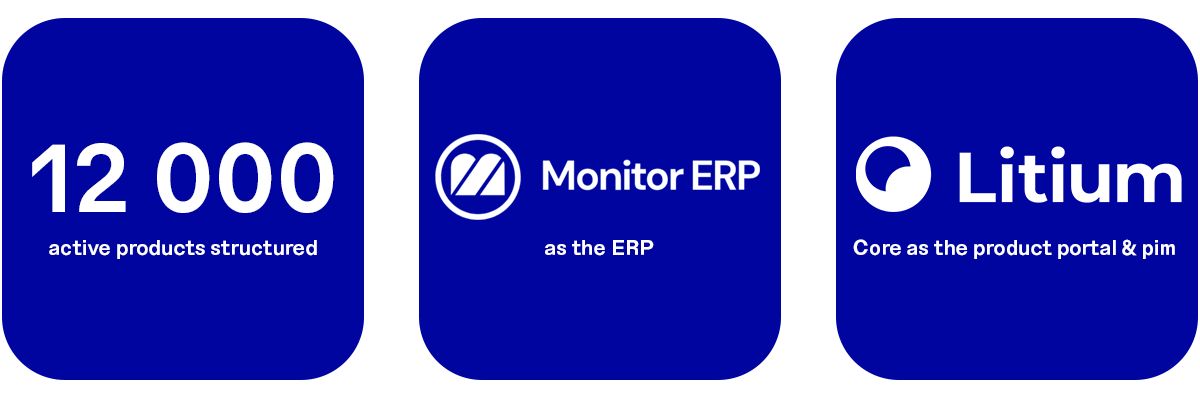
The result is a closed product portal for existing customers, roughly 12,000 structured items and a stable foundation for future digital order placement.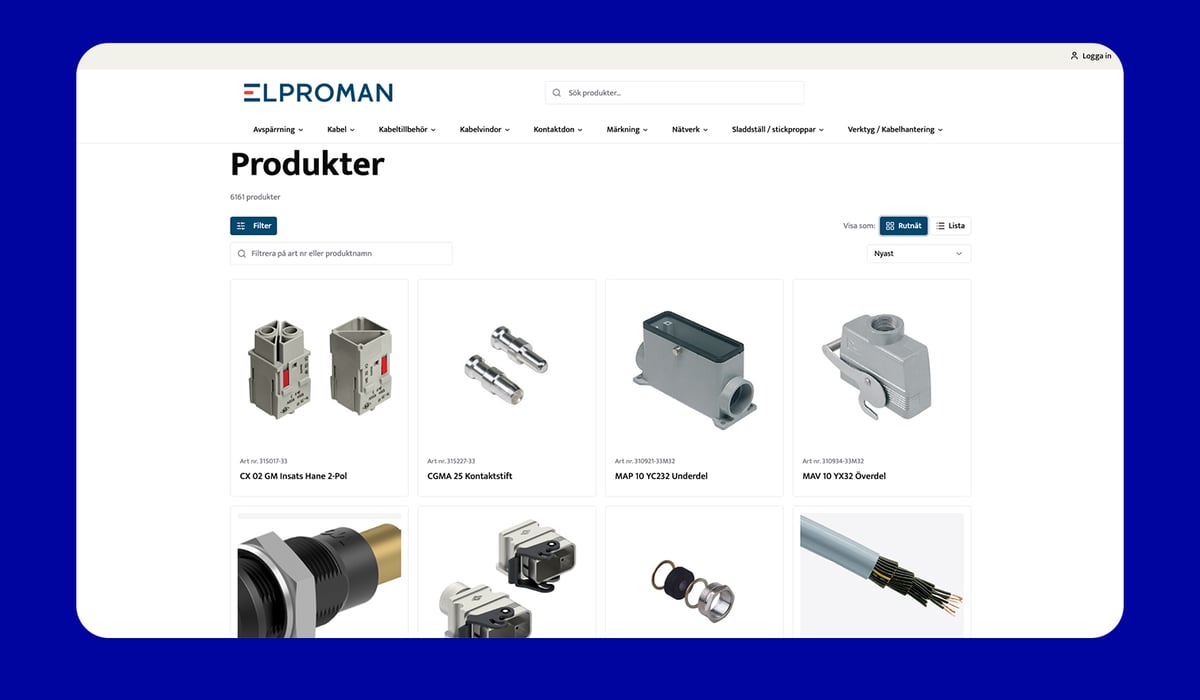
A B2B business where the right product information is decisive
Elproman supplies electrical components to Swedish industry: cables, connectors and parts that sit inside machines and installations. The company has a turnover of around 150 MSEK, 34 employees and customers in Sweden, the Baltics and a number of export markets.
All sales are B2B and are directed at manufacturing companies and the purchasing departments that buy on their behalf. Orders often come in by email, as PDFs, as files exported from the customer's own system, or by phone.
For Elproman the challenge was therefore not primarily to open a traditional webshop. It was about creating the conditions for digital sales through better structure in the product information customers need in order to choose correctly.
The challenge: product data in too many places
A customer calls and asks whether a certain cable can handle a certain temperature. The answer exists, but it might sit in the ERP system, in a PDF from a supplier, in a spreadsheet someone built four years ago, or in a colleague's head.
Tracking down the information might only take a few minutes. But when the same type of question comes up dozens of times a week, it quickly becomes an obstacle to both efficiency and customer experience.
Elproman uses Monitor ERP, which handles orders, stock, prices, purchasing and invoicing. But running business processes and describing products are two different things. Technical specifications, variants, dimensions, documentation and product sheets require a different kind of structure than an ERP system is built for.
Elproman looked at the option of adding more fields to the ERP system, but saw it as a weak long term solution. The more product information that is built into the wrong place, the harder it becomes to maintain and develop over time.
With roughly 12,000 active items, of which 9,000 to 10,000 are relevant to sell online, the need became clear. Before Elproman could take the next digital step, the product information needed a clear home.
“Monitor runs our operations. Orders, stock, prices, it works. But Monitor is not built to handle product data. We could add fields, and then more fields, but then we would just have built ourselves further into something that would not hold up anyway.”
– Attila Enhardt, CEO, Elproman
Why Elproman chose Litium Core
Elproman was not looking for an open webshop. They needed a place where the product information could live properly: structured, complete and up to date. At the same time the solution needed to be connected to Monitor, so that Elproman would not have to maintain two versions of the truth.
This is where the division of labor between the systems becomes central. Monitor continues to handle prices, stock, orders and customers. Litium Core handles the product information: specifications, attributes, images and documents. Each system does the job it is built for.
Two things were particularly important to Elproman.
First, they did not want an open webshop. The customers are known accounts, and only existing customers should be able to order online. What was needed was a closed portal rather than an open shop window.
Second, Elproman did not want to replace their existing website. Over the years the company has invested heavily in content and search visibility, and did not want to risk that in order to consolidate everything into a new solution. The next step needed to work alongside what already worked.
“We were not looking for a webshop. We were looking for a place where the products could live. If we cannot describe what we sell properly, it does not matter what we build on top. Then it is just a shop window with empty shelves.”
– Attila Enhardt, CEO, Elproman
A standard integration between Monitor and Litium Core
The connection between Monitor and Litium is based on a standard integration rather than a custom build. Item data, prices, stock and customers continue to be owned by Monitor and flow into Litium.
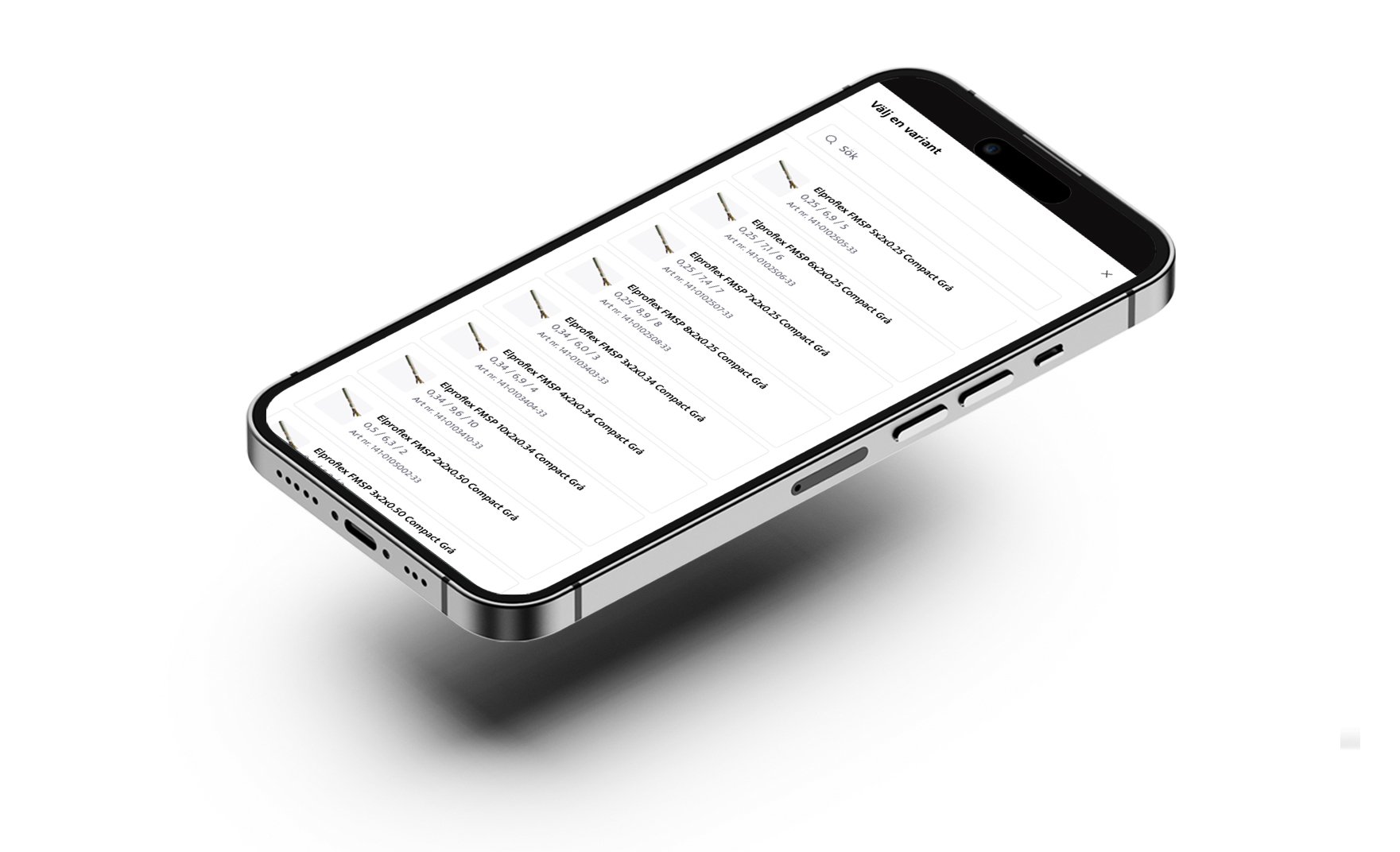
In Litium Core the product information is then enriched with what the ERP system is not built to handle: specifications, attributes, images and documents.
For Elproman this meant they could take a big step in their digital development without changing ERP system, altering their basic routines or moving their website. The portal was put in place alongside the existing website and became a new digital surface for existing customers.
Today roughly 12,000 items are structured in one place, with a clearer order for how the information is maintained and used.
Results: a product portal in operation and a foundation for digital sales
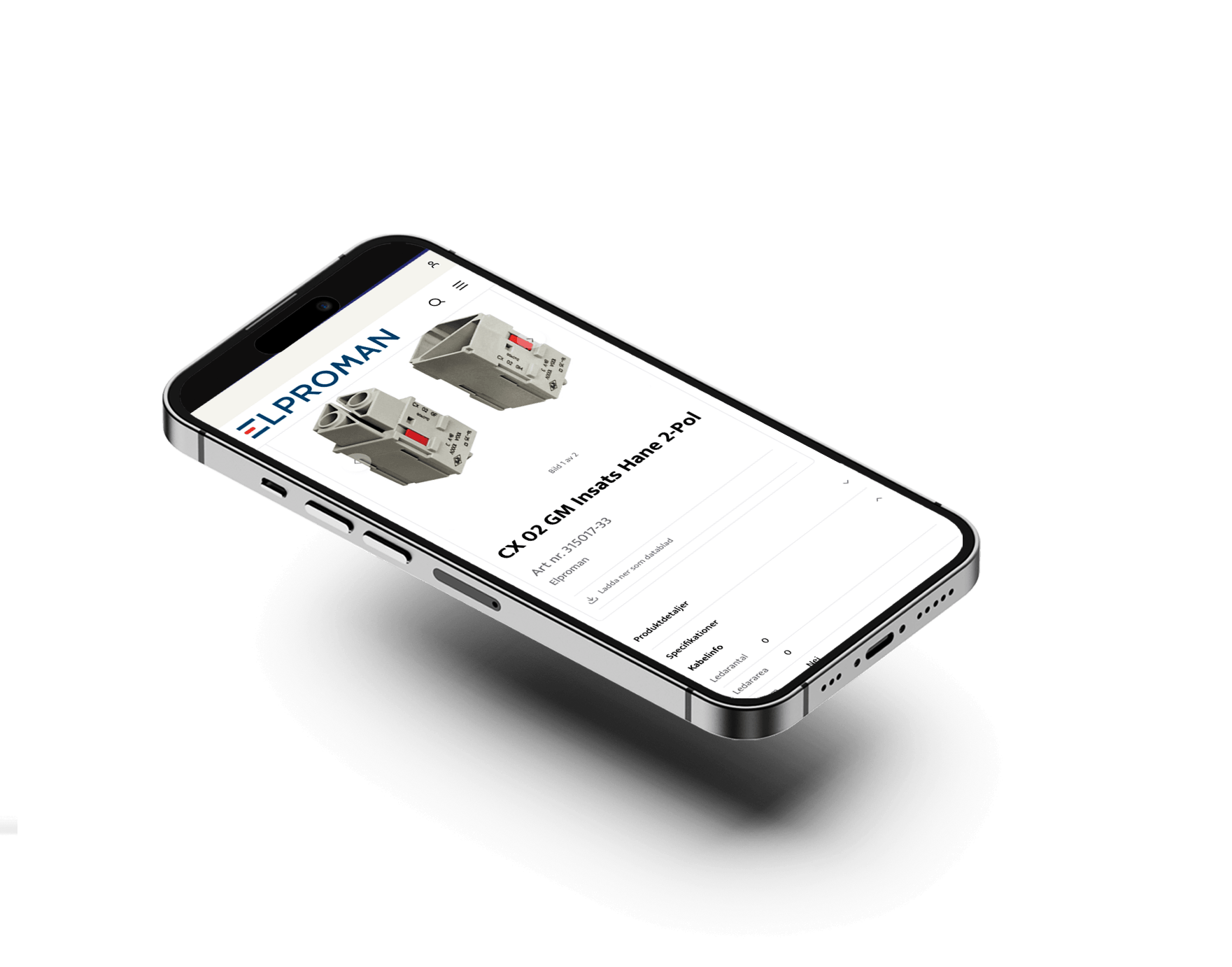
Elproman's product portal is live. Customers can log in, look up an item and find specifications without having to call or email.
That creates value already today. Customers get better access to the right information, Elproman reduces its dependence on internal knowledge scattered across the organization, and the product information becomes easier to maintain over time.
At the same time, the most important result may be that Elproman now has a foundation to build on. The product information is structured, connected to the ERP system and gathered in a way that makes the next step possible.
Digital order placement is therefore not a major technology shift that has to happen all at once. It is a natural next step, one that Elproman can take gradually and at its own pace.
Next step: order placement when the time is right
For Elproman, digital order placement is the next step, but not something that needs to be rushed. The ambition is to develop the digital business gradually, with a continued focus on simplicity, low risk and fast implementation.
There is also a long term interest in bringing the website and the portal closer together, provided that the search visibility built up over time is not put at risk.
The lesson from Elproman's journey is clear: for B2B companies with many technical products, digital commerce often starts long before the order button itself. First the products need to be possible to understand, find and trust. Then online sales can grow from a stable foundation.
“We could have started with a webshop. Then we would have had a webshop full of items nobody can understand. Now we know what we sell, and the rest becomes a question of when, not if.”
– Attila Enhardt, CEO, Elproman
Elproman in brief
- Roughly 12,000 active items structured
- 9,000 to 10,000 items relevant for online sales
- Monitor ERP as business system
- Litium Core as product portal and PIM
- Closed portal for existing customers
- Markets: Sweden, the Baltics and export
